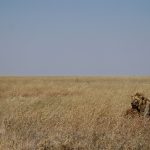
A single lion photo on Instagram rarely shows the six other vehicles parked just outside the frame. It also rarely shows the 400mm lens that made a cat 40 meters away look close enough to touch. None of that makes the photo fake. It just leaves out the planning choices behind it: the spot, the time, and how few vehicles were around.
Touring Insights built this guide from the questions we hear most before a first safari. Will it really look like that, and will I really be that close? Below is what tends to sit outside the frame. We use real numbers for distances, fees, and named places so you can plan around the reality, not just the highlight reel.
The Myth of the Empty Plain
Wide shots of a single vehicle facing a cheetah are common on Instagram, and they are usually genuine. What the caption skips is timing and location. The Maasai Mara National Reserve covers about 1,510 km2. It sets no formal cap on vehicle numbers per sighting during peak migration months, July through October. A famous river crossing at the Mara River can draw 15 to 30 vehicles at once during that window.
Private conservancies bordering the reserve run differently. Ol Kinyei Conservancy caps sightings at around five vehicles, and Naboisho Conservancy enforces a similar limit. Fewer camps operate inside these conservancies. An empty-plain photo is far more likely to come from Mara North Conservancy or Naboisho than from the open reserve at peak season.
The Myth of the Golden Light on Every Drive
Every safari feed is full of amber, backlit shots. That light exists for roughly 30 to 45 minutes after sunrise and before sunset. Kenya sits near the equator, so both happen fast, with no long dusk. Most of a game drive happens in flat midday light that looks nothing like the photos.
Photographers also shoot dozens of frames per sighting and post one. A guest expecting every moment to look cinematic finds a quieter reality instead: long stretches of driving, animals resting in shade, and light that photographs as ordinary. Booking a dawn or dusk drive, rather than a mid-morning slot, is the one adjustment that gets you closer to the feed you have seen.
The Myth of “Right Next to the Lion”
A cat filling the frame usually means a long lens, not proximity. Kenya Wildlife Service and conservancy guides work to a minimum approach distance of roughly 20 to 25 meters from predators. That gap can shrink with calm, habituated animals, but it is never bumper-to-paw. Guides shoot with 400mm to 600mm equivalent lenses precisely because the animal is not actually close.
That distance rule protects the animal and the guests, not the shot. A guide who holds back and lets you use a longer lens usually gets you a better photo. Pushing in too close just stresses the animal into moving off.
The Myth of Guaranteed Big Five in a Single Trip
Big Five composite posts, lion, leopard, elephant, buffalo, rhino, imply a tidy checklist completed in one outing. Leopards are solitary and mostly nocturnal. Even experienced guides in leopard-dense areas like the Mara Triangle sometimes go two or three days without a confirmed sighting. Rhino sightings are limited too. The Mara ecosystem holds very few, so most confirmed sightings happen at Ol Pejeta Conservancy or Lake Nakuru National Park instead.
A realistic itinerary spreads Big Five odds across a longer trip and more than one ecosystem. It does not promise all five inside 48 hours in one park.
Kenya Safari: Instagram Claim vs On-the-Ground Reality
| Instagram Impression | On-the-Ground Reality |
|---|---|
| One vehicle, empty plain | 15-30 vehicles common at Mara River crossings in peak season (Jul-Oct) |
| Lion “right next to” the vehicle | Guides hold roughly 20-25m minimum distance; shot with 400-600mm lens |
| Golden light all day | True golden hour lasts approx. 30-45 minutes at dawn and dusk near the equator |
| Big Five in one outing | Leopard sightings can take 2-3 days even in leopard-dense areas; rhino mainly at Ol Pejeta or Lake Nakuru |
| Every camp looks like the drone shot | Camp styles vary widely from simple canvas tents to architect-built suites at the same “safari” search term |
Where the Quiet Photos Actually Come From
If the calm, uncrowded feed is what you want, the location matters more than the camera. Conservancies bordering the Maasai Mara National Reserve run stricter vehicle caps and lower bed density by design. Camps there pay conservation fees that fund exactly this kind of limit.
| Area | Approx. Size | Typical Vehicle Cap per Sighting | Indicative Conservation Fee (USD/person/night) |
|---|---|---|---|
| Maasai Mara National Reserve | 1,510 km2 | No formal cap; peak-season crowding common | 80-100 (park entry, per 24 hrs) |
| Mara Triangle (Mara Conservancy) | approx. 510 km2 | Managed, lower density than main reserve | included in reserve entry |
| Mara North Conservancy | approx. 320 km2 | Around 5 vehicles | 100-160 |
| Naboisho Conservancy | approx. 200 km2 | Around 5 vehicles | 100-180 |
| Ol Kinyei Conservancy | approx. 74 km2 | Around 5 vehicles | 100-160 |
Rates above are indicative ranges. Confirm current fees with the specific camp or a partner operator before booking, since they shift by season.
Getting There: Distance Behind the Photos
Part of what Instagram hides is the travel day itself. A guest who flies straight from a Nairobi hotel to a Mara airstrip skips a very different experience from one who drives.
| Route | Distance / Time |
|---|---|
| Nairobi (Wilson Airport) to Mara airstrips (Musiara, Keekorok, Ol Kiombo) | approx. 45 minutes by air |
| Nairobi to Maasai Mara via Narok (road) | approx. 270 km, 5-6 hours |
| Nairobi to Ol Pejeta Conservancy (road) | approx. 200 km, 3.5-4 hours |
| Nairobi to Lake Nakuru National Park (road) | approx. 160 km, 2.5-3 hours |
How to Get Photos Closer to the Feed You Have Seen
None of this means the Instagram version is out of reach. It means specific choices get you closer to it. Book a conservancy over the open reserve if crowd-free frames matter more to you than migration-season odds. Ask your camp to schedule drives around first and last light rather than a single mid-morning slot.
Bring or rent a lens in the 300mm to 400mm range if photography matters to you. Phone cameras cannot recreate the compression that makes distant animals look close. Finally, build in at least four to five nights across two ecosystems. That is what actually improves Big Five odds, not a single, tightly packed 48-hour stop.
Explorer Notes
Guides in the Mara conservancies often know which specific trees and drainage lines a leopard uses that week. Sightings cluster around territory, not random luck. Ask your guide what they have seen in the last 48 hours before the drive starts, rather than what the area is known for in general.
Light quality also changes with dust and season. Dry months, roughly June through October, carry more dust in the air. That can deepen sunset colors in photos but reduce midday clarity. Wetter months, November through May, give cleaner air and dramatic cloud skies, though taller grass can hide smaller animals.
One more detail rarely mentioned online: conservancy vehicle caps run on radio protocol between guides, not a ranger physically counting cars. A guide who respects that system will sometimes leave a sighting early so another vehicle can take a turn. That courtesy is part of why conservancy photos look calmer, and it is worth asking about when you compare camps.
What to Read Next
- Curious what you will actually pay to enter the reserve versus a conservancy? See our Maasai Mara Reserve entry fees guide.
- Want the calm, low-vehicle experience specifically? Read our small, intimate safari camps in the Mara guide.
- Wondering why some cats get called by name on social media? Check our guide to named lions and cheetahs in the Maasai Mara.
FAQ
Is a Kenya safari really as crowded as some Instagram photos suggest? It depends on where and when. The open Maasai Mara National Reserve gets crowded at river crossings in peak season. Conservancies like Naboisho and Ol Kinyei cap vehicles per sighting and stay quieter year-round.
How close do safari vehicles actually get to lions and leopards? Guides typically hold a minimum distance of about 20-25 meters from predators for safety and animal welfare. Close-up photos are almost always shot with a long telephoto lens, not from a closer vehicle position.
Can I see the Big Five in one Kenya safari trip? It is possible but not guaranteed, especially for leopard and rhino. A longer trip across more than one ecosystem improves the odds, including a stop at Ol Pejeta Conservancy or Lake Nakuru for rhino.
Why do some safari photos look emptier and calmer than others? They usually come from private conservancies with enforced vehicle caps, rather than the open reserve during peak migration season. Bed density and vehicle limits differ a lot between the two.
What is the best time of day for safari photos that match what I see online? The first and last 30-45 minutes of daylight give the warm, low-angle light seen in most standout photos. Ask your camp to prioritize drives around sunrise and sunset if photography matters to your trip.
A safari that matches the feed in your head is less about luck and more about your choices: conservancy, season, and drive time. Visit our Tour Packages page to compare conservancy and reserve options, or ask a partner operator to walk you through vehicle limits and camp density before you book.
Further reading
More safari planning resources
- Best time to visit Kenya month-by-month map from Valley Safaris
- Big Five safari parks guide on Touring Insights
- Big Five safari collection on FindMySafari
- Best time to visit Kenya on Touring Insights
Related guides: Sharing Your Safari Online: Instagram, YouTube, or a Blog?.